
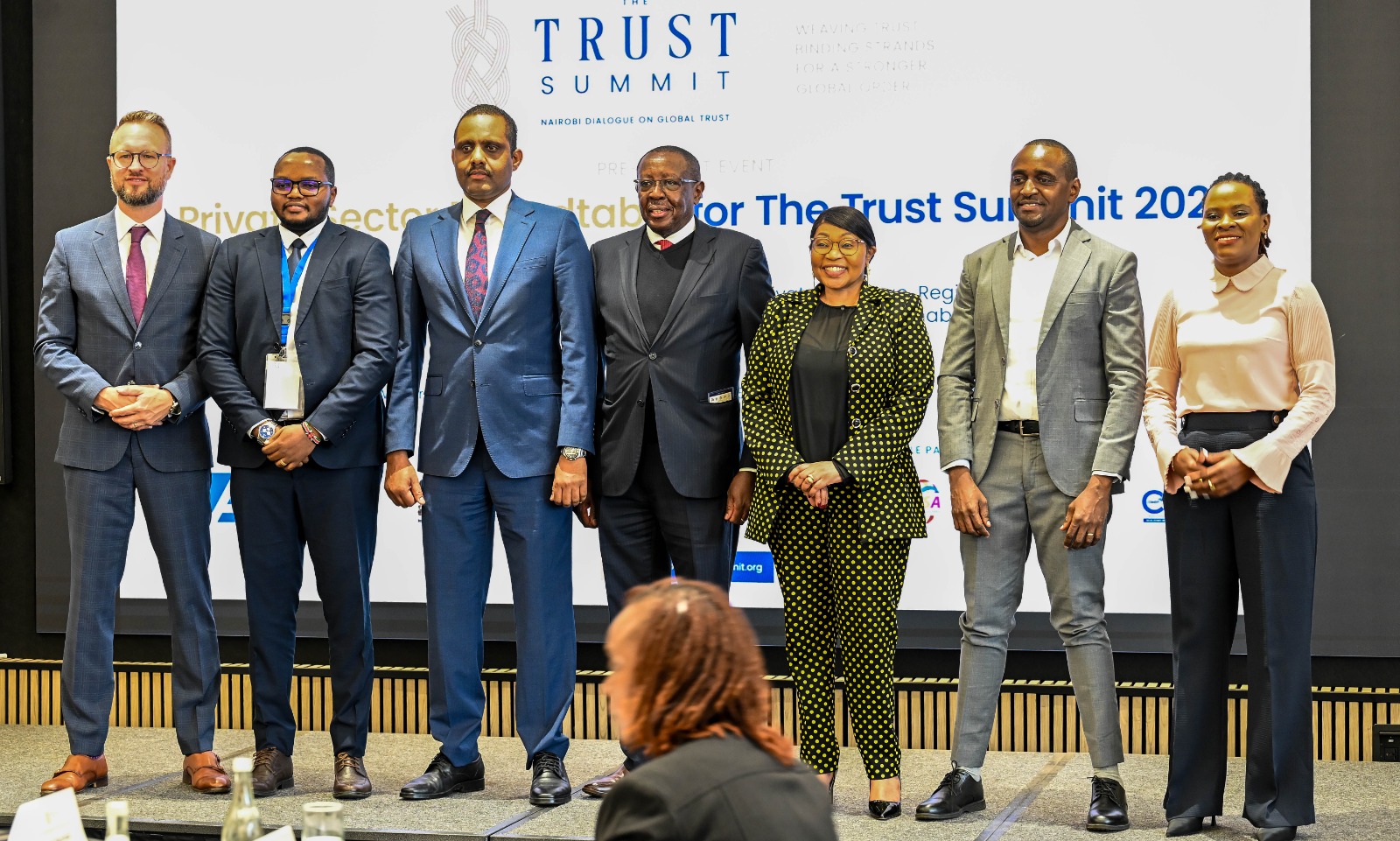
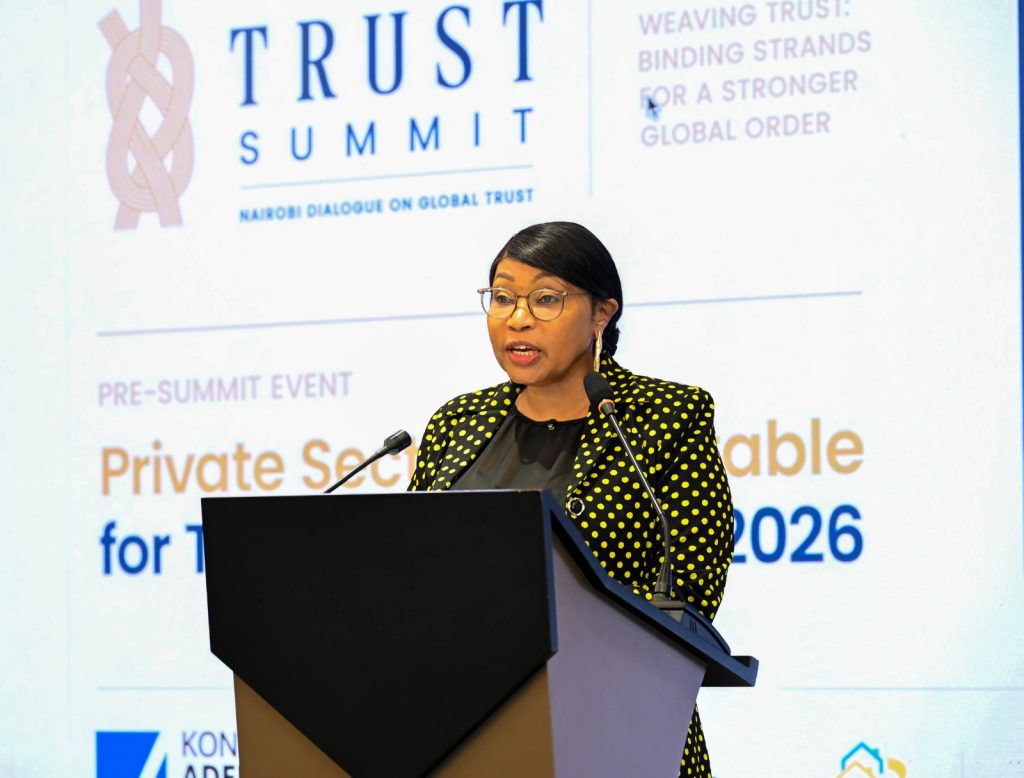
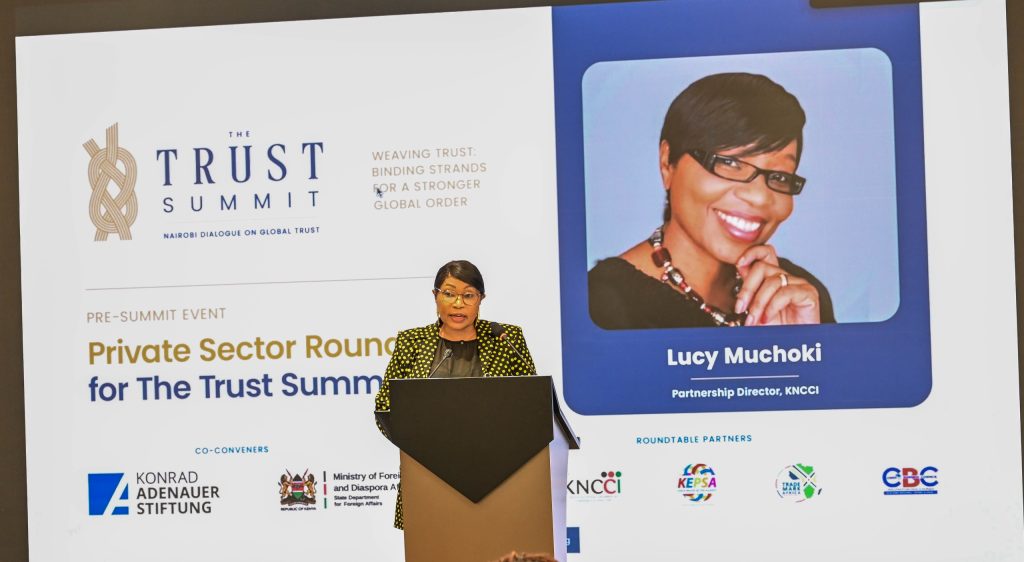
 The Kenya National Chamber of Commerce and Industry (KNCCI) participated in the Private Sector Roundtable held ahead of the Global Trust Summit 2026, with Partnership Director Lucy Muchoki representing the Chamber.
KNCCI’s Trust Seal and the MSME Opportunity
In her remarks, Director Muchoki set out KNCCI practical role in building transparency, credibility and security within Kenya’s growing e-commerce sector. She presented the Chamber’s e-commerce trust seal a digitally verifiable mark issued to businesses that meet KNCCI verification requirements designed to help customers distinguish verified sellers from unknown or potentially fraudulent online traders, with particular relevance for MSMEs engaged in digital and cross-border trade.
Trust as Economic Infrastructure
Grounding the discussion in data, she cited the 2025 Barometer, which found that 72% of Kenyans trust business, compared with 38% who trust government and 76% who trust NGOs. She framed this as both a mandate and a responsibility for the private sector to use that confidence constructively in support of investment, employment, innovation and economic development.
Regional Trade and Digital Trust
On regional integration, Director Muchoki noted that frameworks such as the East African Community, COMESA and the African Continental Free Trade Area create opportunity, but agreements alone do not generate trade businesses must trust their partners, investors must trust the regulatory environment, and traders must be confident that rules will be implemented and goods can move efficiently across borders.
On digital trust, she cited Barometer data showing that 67% of Kenyans trust artificial intelligence, while 80% are concerned that government leaders intentionally mislead the public. She also flagged that 46% of Kenyans approve of hostile activism as a means of driving change a signal, she said, that institutions must listen and engage meaningfully before grievances undermine social and economic stability.
Inclusion and Partnership
On inclusion, she argued that trust must translate into practical access to finance, procurement opportunities, markets and business networks for MSMEs, women and youth entrepreneurs. Addressing this, she said, cannot be done by any single actor it requires government, corporates, investors, development partners, technology companies, academia and entrepreneurs working together, with KNCCI’s role being to convene these stakeholders around practical solutions.
Beyond Agreement: Converting Trust into Economic Value
Director Lucy emphasized on that trust matters is not enough. She pressed the room to go further to name what needs to change, identify who must act, and define how progress will be measured. Her question anchored the day’s discussion: “How do we convert trust into economic value?”
She used the platform to unveil a landmark moment for the Chamber as KNCCI marks 60 years since its founding, it will host the Africa commerce and industry summit projected to draw more than 5,000 private-sector participants from Kenya and abroad.
Government Representation: Trust as the Foundation of Investment
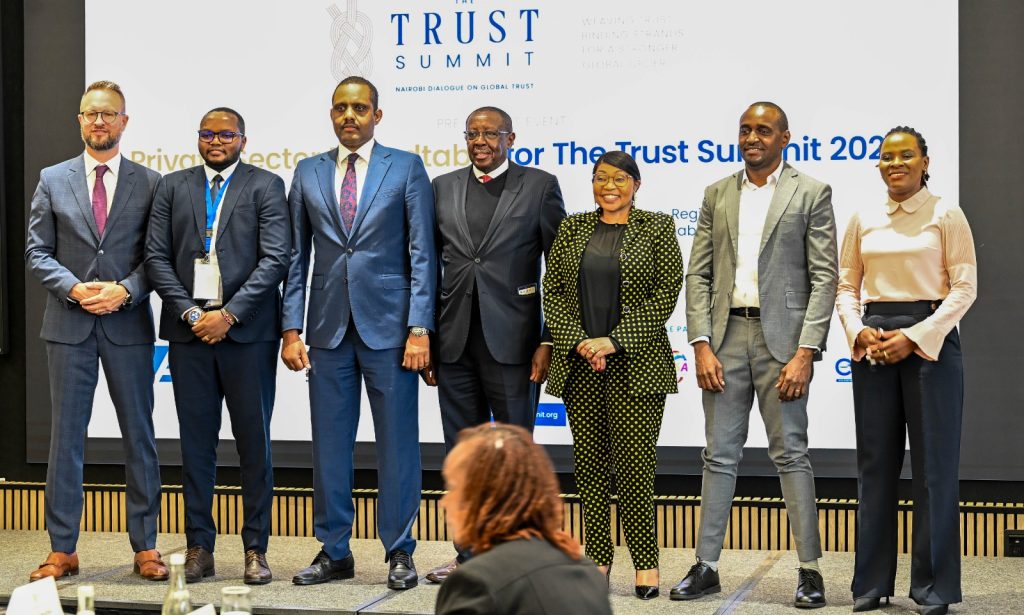
Dr. Korir Sing’oei, Principal Secretary, State Department for Foreign Affairs, was represented by Mr. Ibrahim Mustafa, Deputy Director General and Head of the Policy, Research and Strategic Analysis Directorate, Ministry of Foreign and Diaspora Affairs, who stood in as Chief Guest.
Mr. Mustafa framed trust as central to investment decisions, regulatory compliance, access to finance and long-term competitiveness, quoting Nobel laureate Kenneth Arrow’s observation that commercial transactions inherently carry an element of trust. He confirmed that Kenya will host the Global Trust Summit 2026 in Nairobi from 21 to 23 October, under the theme “Reviving Trust: Building Blocks for a Stronger Global Order,” convening governments, business, development partners, academia and civil society, in line with Kenya’s Fifth Open Government Partnership National Action Plan and the outcomes of the 2024 Summit of the Future.
He outlined reciprocal responsibilities between government and the private sector government providing a stable policy environment, credible procurement, fair competition and predictable tax administration, and the private sector upholding corporate governance, ethical leadership and consumer trust. He also highlighted regional integration under the EAC, COMESA and AfCFTA a market of more than 1.4 billion consumers and noted Kenya’s current chairmanship of COMESA ahead of the upcoming COMESA-EAC-SADC Tripartite Summit.
On digital risks, he flagged the persistence of online fraud and the misuse of artificial intelligence to create false identities and manipulate data, calling for stronger investment in secure digital systems and cybersecurity. He cited the National Infrastructure Fund’s mobilization of USD 1 billion in investment as a practical example of trust translating into economic value, and closed by reaffirming the State Department’s commitment to forging robust institutional partnerships with the private sector.
Other Opening Remarks
• Daniel Wanjohi Ndirangu, CEO of the Institute of Public Finance, who welcomed participants on behalf of the co-convening secretariat.
• Mathias Kamp, Country Director, Konrad-Adenauer-Stiftung (KAS) Kenya Office, who spoke to KAS’s partnership in convening the roundtable and the wider Summit.
• Eng. James N. Mwangi, Board Member of KEPSA, who represented the Kenya Private Sector Alliance.
Josephine Wawira, Head of Corporate Communications, KEPSA, served as Master of Ceremony throughout the session.

Leave A Comment