
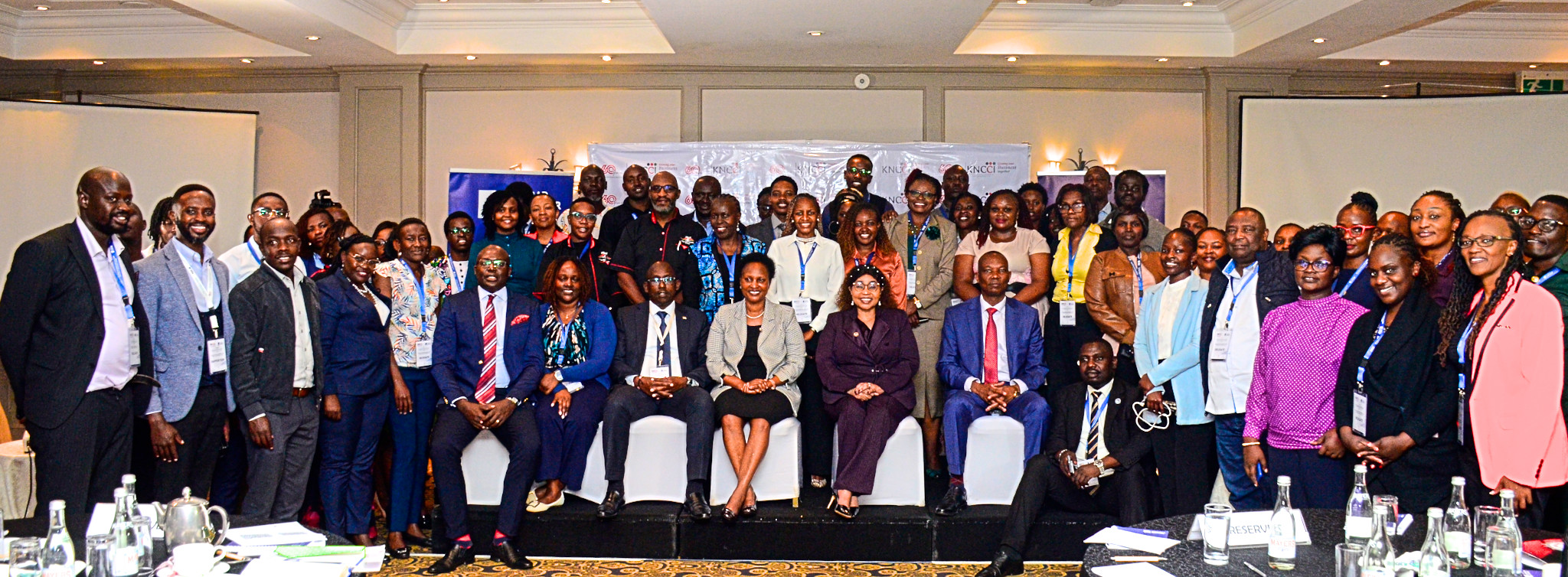

The Kenya National Chamber of Commerce and Industry (KNCCI), in partnership with Konrad-Adenauer-Stiftung (KAS), convened the National Business and Elections Continuity Advocacy Forum in Nairobi, bringing together government representatives, private sector leaders, development partners and other stakeholders to advance a coordinated national approach to safeguarding business operations, investor confidence and economic stability ahead of Kenya’s 2027 General Election.
Held under the theme “Keeping Kenya’s Economy Open, Operational and Resilient During the 2027 Electoral Cycle,” the forum focused on validating policy recommendations, advancing the National Business and Elections Continuity Advocacy Agenda and establishing practical mechanisms to protect businesses and livelihoods before, during and after the elections.
Speaking during the forum, KNCCI National Director Lucy Muchoki representing KNCCI President Dr Erick Rutto emphasized the importance of early preparedness, noting that Kenya’s previous electoral cycles have demonstrated the economic consequences of political uncertainty, including disrupted supply chains, declining investment confidence, business closures and job losses.
Dr. Rutto highlighted research showing that during the 2007/2008 post-election crisis, Kenya’s flower exports declined by 24%, with losses reaching 38% among firms operating in violence-affected areas. International tourist arrivals also declined by 33.9% in 2008, demonstrating the vulnerability of key economic sectors to election-related disruptions.
He further referenced the economic slowdown experienced during the 2017 electoral period, when Kenya’s economic growth declined from 5.9% in 2016 to an estimated 4.9% in 2017, amid election-related uncertainty and other economic pressures.
“Election preparedness must protect democratic participation while safeguarding economic activity, employment and essential services,” Dr. Rutto emphasized.
He underscored the importance of translating the forum’s recommendations into measurable action through institutional commitments, clear responsibilities and realistic implementation timelines.
Dr. Rutto further acknowledged Konrad-Adenauer-Stiftung for its partnership in advancing the initiative, noting that sustained collaboration between the private sector, government and development partners would be critical in protecting Kenya’s economic progress throughout the electoral cycle.
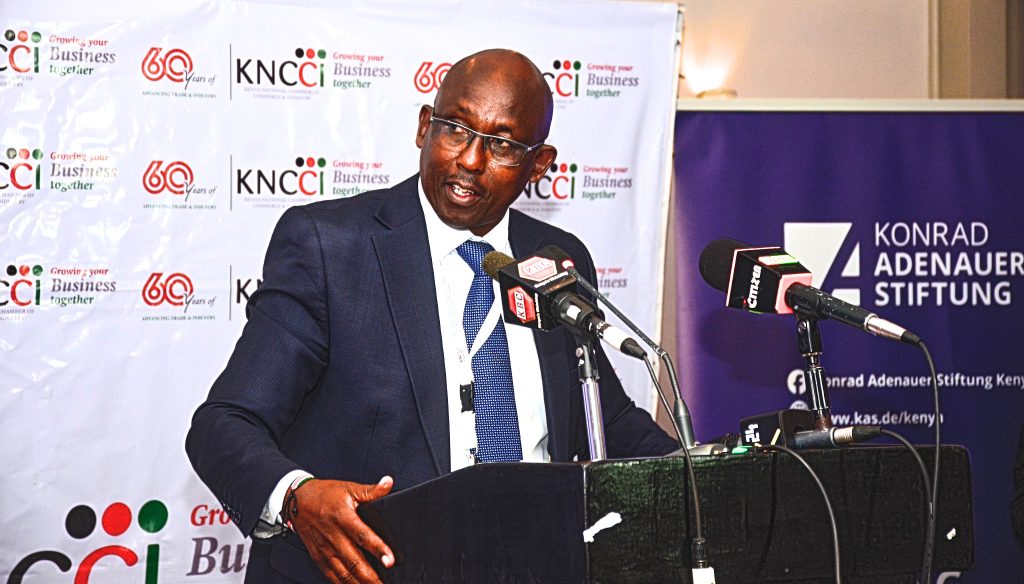
In his welcoming remarks, KNCCI Chief Executive Officer KK Mutai emphasized that business continuity extends beyond individual enterprises to the millions of Kenyans whose livelihoods depend on uninterrupted economic activity.
He observed that Micro, Small and Medium Enterprises (MSMEs) are particularly vulnerable to election-related disruptions because of their limited capacity to absorb prolonged closures, reduced customer demand, damaged stock and interruptions to supply chains.
Mutai explained that the forum sought to validate the business continuity policy brief, advance the national advocacy agenda and identify practical trade facilitation measures to ensure the uninterrupted movement of goods, people and payments during the electoral period.
He further highlighted KNCCI’s commitment to leveraging its county chapter network to ensure that the concerns of businesses across the country inform national policy discussions and the implementation of agreed interventions.
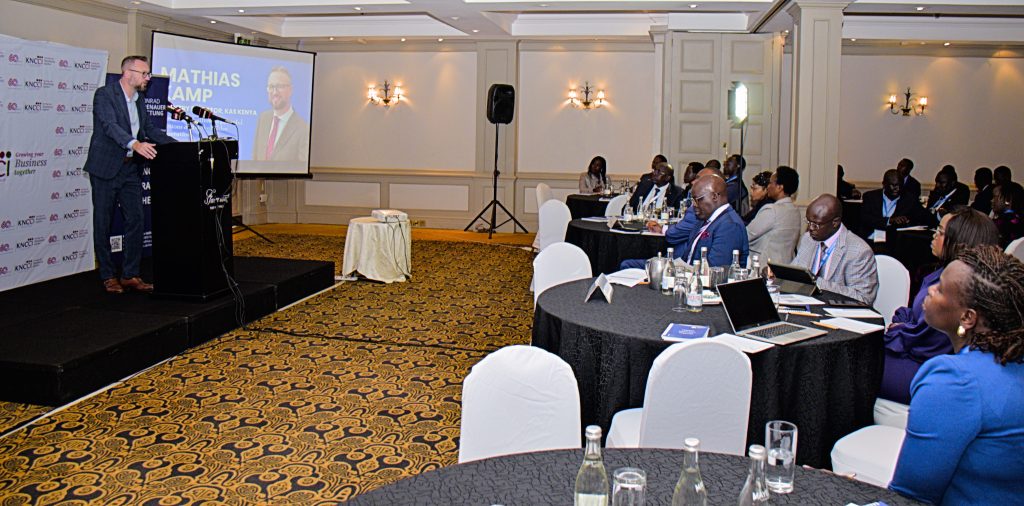
Representing Konrad-Adenauer-Stiftung (KAS), Country Director Mathias Kamp underscored the relationship between democratic stability, responsible communication and sustained economic activity.
“While we work on the integrity of our elections, we must also work on our communication to ensure our citizens are well informed and fight misinformation,” said Kamp.
He emphasized that misinformation and uncertainty during electoral periods can undermine public confidence, influence investment decisions and create unnecessary disruptions to business operations.
“Economy is simply everyone doing business, and elections should never affect the economy,” Kamp added, reinforcing the importance of ensuring that democratic processes and economic development progress together.
Through its partnership with KNCCI, Konrad-Adenauer-Stiftung continues to support constructive engagement among public institutions, the private sector and civil society, with a focus on strengthening democratic governance, responsible communication and economic resilience.
Providing the Government’s perspective, Symon Chelelgo, HSC, Deputy Director at the State Department for Trade, Ministry of Investments, Trade and Industry, gave the Government’s commitment to maintaining a stable, predictable and competitive business environment throughout the electoral period.
Chelelgo emphasized that democratic processes should not interrupt economic activity or undermine long-term investment decisions, noting that the Government remains focused on strengthening trade facilitation, supporting enterprise development and ensuring institutional continuity.
He highlighted ongoing efforts to improve the investment climate through infrastructure development, streamlined regulatory processes, industrial development, value addition and expanded market access.
He also underscored the importance of protecting trade corridors, maintaining efficient logistics and strengthening supply-chain resilience to ensure that businesses continue operating without unnecessary interruptions.
The State Department for Trade further emphasized the importance of public-private collaboration, responsible communication and business preparedness in safeguarding investor confidence.
“Kenya is open for business before, during and after the electoral period,” was the Government’s central message, reiterating its commitment to sustaining trade, investment and economic growth irrespective of the political calendar.
A key focus of the forum was the advancement of four interconnected initiatives developed through the KNCCI–KAS partnership: the Policy Brief on Business Needs Analysis During the Election Year, the Policy Brief on the Business Community Action Plan, the National Business and Elections Continuity Advocacy Agenda, and the proposed Business–Government Technical Working Committees.
The proposed technical working committees will focus on six priority areas: peace, security and early warning; electoral integrity, civic education and information; trade, transport and supply-chain continuity; MSME resilience, employment and livelihoods; digital infrastructure, utilities and essential services; and policy coordination, financing and monitoring.
The advocacy agenda, proposed for implementation from November 2026 to September 2027, seeks to provide a structured framework for engaging government institutions, securing policy commitments and monitoring measures designed to safeguard economic activity.
Through this initiative, KNCCI and Konrad-Adenauer-Stiftung aim to strengthen national preparedness, promote responsible communication, protect businesses and livelihoods, and ensure that Kenya’s democratic processes do not compromise economic stability.
The forum reinforced the shared responsibility of government, the private sector, development partners and civil society to maintain a peaceful, predictable and enabling business environment.









Leave A Comment