
 11th February 2026 – Nairobi, Kenya: The Kenya National Chamber of Commerce and Industry (KNCCI) has today published a Sector-Wide Impact Assessment (SWIA) of Kenya’s Coffee Value Chain, examining human rights risks, including labour conditions, governance challenges, environmental impacts, and sustainability practices across the sector.
The assessment was commissioned to understand prevailing human rights challenges within Kenya’s coffee production chain and to examine how global coffee buyers conduct human rights due diligence and engage producers to manage these risks.
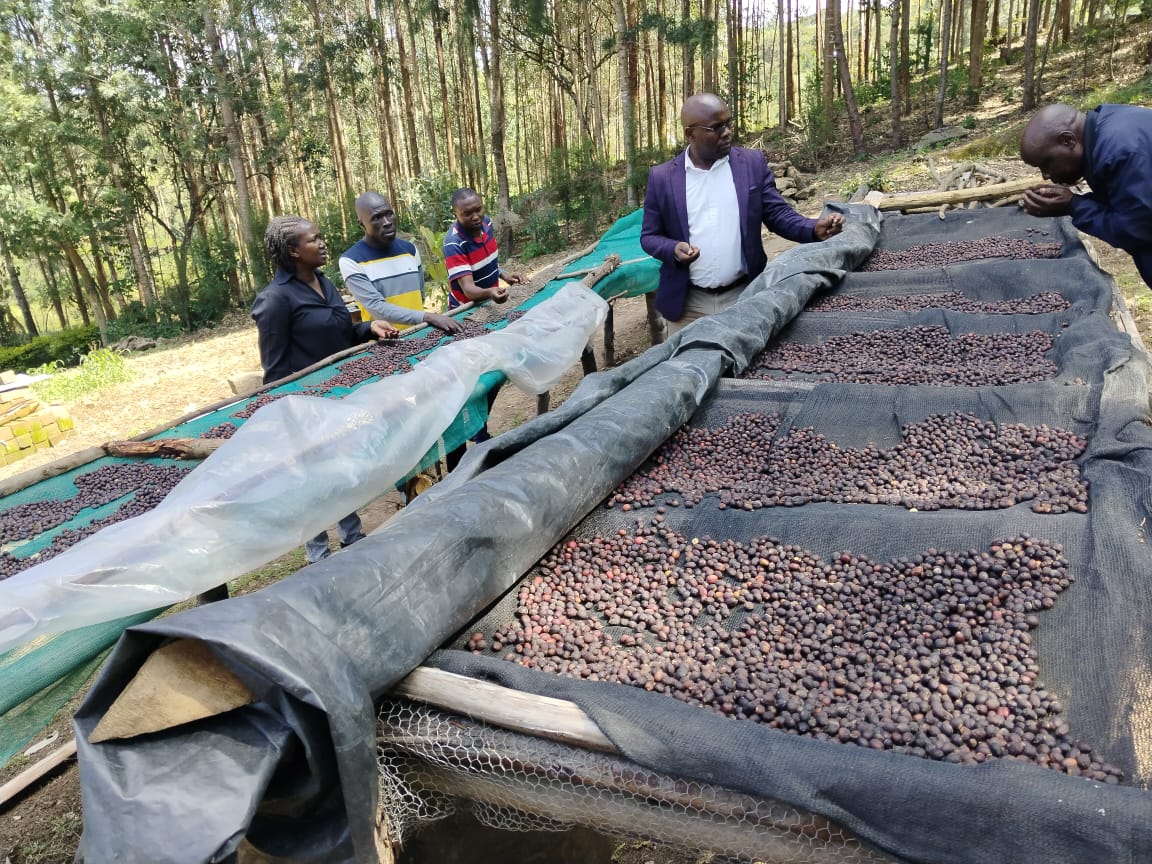
Kenya’s coffee sector comprises over 800,000 smallholder farmers, accounting for approximately 99.6% of all producers, alongside about 3,000 estates (0.4%) spread across 33 counties, with Central and Western Kenya forming the core production regions. While Kenya produces high-quality Arabica coffee that commands a premium in international markets, national production has remained below one million 60-kg bags annually. This stagnation is attributed to ageing coffee trees, disease outbreaks, limited uptake of modern agronomic practices, and increasing climate variability making the sector a critical case study for examining sustainability and human rights risks in agribusiness.
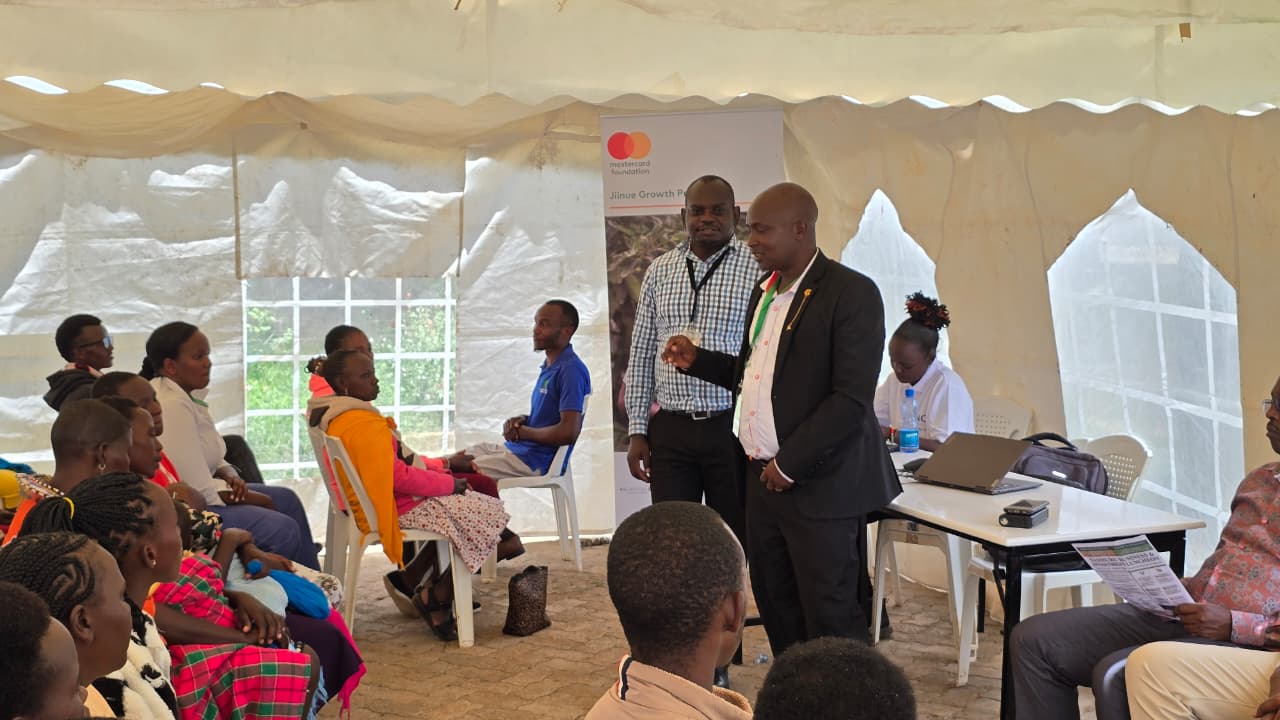
The assessment was conducted in collaboration with the Danish Institute for Human Rights (DIHR) and the Kenya National Commission on Human Rights (KNCHR), with support from the Swedish International Development Cooperation Agency (Sida). Field research was undertaken across six coffee-producing counties—Kirinyaga, Nyeri, Kiambu, Embu, Kericho, and Nandi—between the fourth quarter of 2024 and the first quarter of 2025. The study employed a mixed-methods approach, combining desk research, qualitative interviews, focus group discussions, and field observations. Engagements were conducted across the full coffee value chain, including small- and large-scale farmers, cooperatives, estates, mills, regulators, and international buyers.
“KNCCI and its partners are proud to have completed this important sector wide impact assessment that will help improve the working environment in the coffee value chain. As we have for long predicted, the findings confirm the presence of multiple human rights impacts across all levels of coffee production. At the smallholder level, casual labour arrangements predominantly involving women often exposed workers to unsafe conditions, including inadequate protective equipment during pesticide application and wages that sometimes fell below statutory minimums. Smallholder farmers also reported rising input costs, limited access to disease-resistant seedlings, and insufficient extension services on good agricultural practices, all of which threaten the economic viability of coffee farming,” stated Dr. Erick Rutto, Chamber President Kenya National Chamber of Commerce and Industry (KNCCI).
Interviews with buyers and traders revealed a heavy reliance on certification schemes such as Rainforest Alliance, Fairtrade International, C.A.F.E., and 4C to manage human rights risks. However, the assessment found that certification audits rarely reach the farm level for smallholders, as certification is typically held at the cooperative level. As a result, certification benefits, particularly premiums, do not consistently reach farmers and workers, creating a disconnect between certification frameworks and conditions on the ground.
“The assessment clearly showed that as global buyers of coffee conduct their own human rights due diligence, certification schemes cannot replace direct engagement with producers on the ground to manage sustainability risks,” stated Dirk Hoffmann, Chief Adviser at the Danish Institute for Human Rights.
KK Mutai KNCCI Chief Executive Officer added:
“KNCCI notes that these findings come at a critical moment, as Kenya continues to implement coffee sector reforms and as global markets increasingly emphasize human rights due diligence and sustainable sourcing. The assessment underscores the importance of strengthening dialogue and engagement platforms between coffee producers, buyers, and regulators to ensure that sustainability and human rights considerations remain central to ongoing reforms.”
The report provides evidence-based recommendations for government institutions, international buyers, cooperatives, and other value-chain actors to strengthen responsible business conduct and enhance the long-term competitiveness and sustainability of Kenya’s coffee sector.
KNCCI calls upon stakeholders across the coffee ecosystem to engage with the findings of the assessment and to participate in constructive dialogue aimed at translating the recommendations into practical, coordinated action.
The full report, “An Assessment of Human Rights Risks and Sustainability Practices in Kenya’s Coffee Value Chain,” is available on the KNCCI website.
https://www.kenyachamber.or.ke/wp-content/uploads/2025/06/KNCCI-Kenya-Coffee-Sector-Wide-Impact-Assessment-Report.pdf




Leave A Comment